
 23 October 2025
 Share
Share
1

Safe Laser 1800 Vs. Safe Laser 500: What Are The Differences?
The efficiency of photobiomodulation devices like the Safe Laser 1800/500 is governed principally by their fundamental technical parameters. In particular the wavelength and output power are vital. Although both devices work using the same basic fundamental principles of science, their specific differences in these parameters dictate their unique clinical applications, treatment efficiency and the depth of their action. Wavelength is the determining factor in where light energy will be absorption by the body. The power output, on the other hand is the determinant of how fast and how much energy it is able to provide. A comprehensive analysis of these factors reveals why the Safe Laser 1800 is engineered to be a powerful deep-tissue unit for large-scale clinics as well as the Safe Laser 500 is designed as a versatile, portable device that can be used for both treatment that is both superficial and mid-depth.
1. Primary Wavelength: A Shared Foundation for Deep Tissue Penetration
The Safe Laser 1800 and the Safe Laser 500 utilize an 810 nanometer (nm) infrared laser wavelength as their main source of therapy. This is a deliberate and scientifically-grounded choice. The 810nm wavelength is in the "therapeutic range" (650-930nm) that is, where the penetration of light into skin blood, water, or skin is at its highest. This particular wavelength is absorb by cytochrome c oxygenase within mitochondria, activating the photobiomodulation chain. The fundamental mechanism behind both devices to reduce inflammation and pain in the deep tissues, like muscles, joints and ligaments is the same.
2. The Safe Laser 500's Hybrid Wavelength: 810nm & 660nm
Safe Laser 500's hybrid or "cluster-style" application is one of its main attributes. The central diode emits a laser wavelength of 810nm while rings of SuperLuminous Diodes emits light at 666nm. This wavelength absorbs more readily hemoglobin, as well as other pigments that are superficial. The wavelength of 660 nanometers is most efficient in treating superficial conditions such as open wounds. The 500 provides dual-wavelength therapy by simultaneously targeting deep tissues (810 nm) and superficial tissues (660 nm).
3. The Safe Laser 1900's 810nm focus is an all-in-one, high-power laser.
Safe Laser 1800 uses only an 810nm, high-power laser without any supplementary wavelengths. The design principle is centered on intensity and maximum depth of penetration. By concentrating all its power into a single, deeply-penetrating 810 nm wavelength, it's designed to overcome the absorption and scattering that can occur in dense or thick tissues. This makes it a great tool for patients with high body weights who need to access deep joints capsules, large muscles, as well as the spine.
4. Peak Power Output: An Order of Magnitude difference
Their power output at peak is the most significant quantifiable difference. The Safe Laser 1800 has a maximum output of 18 Watts (18,800 milliwatts). Safe Laser 500 produces a peak output of 5 Watts. The SL 1800 delivers 3.5x the power of the SL 500. This disparity is not about effectiveness, but rather about efficiency and the ability to provide a large therapeutic dose to difficult chronic, deep-seated ailments.
5. The impact on treatment time and clinical efficacy
The output of power directly determines the treatment duration. The PBM dose is measured in Joules. Safe Laser 1800 would need to be 18W for a hundred Joules dose. It would take around 5.5 minutes. Safe Laser 500 would need 20 minutes at 5W to provide the same dose. The time required to deliver 500 Joules would be around 28 seconds, which is compared to 100 seconds for a protocol that requires this amount of energy. The time savings with 1800 could be invaluable in a busy clinic setting. It enables faster treatment of patients, and also practical treatment of large areas.
6. Beam Divergence & Coverage Area for Treatment
The type of light that is released is different. Safe Laser 1800 is a single-head laser that produces an emitted light beam that is divergent. This means that the beam is spread when it leaves the applicator. It covers a greater area (several centimeters in diameter) of the skin. This is ideal for treating large regions of inflammation or pain such as a tight quadriceps or lats. Safe Laser 500’s cluster head is better focused which makes it suitable to treat localized structures like tendon, or trigger points. The 660nm ring, on the other hand is designed to treat the superficial tissues.
7. Photon behavior and coherence
The Safe Laser 1800's 810 nm source is a true coherent laser. The theory is that coherent light, which is when photons are of the same phase is more effective at absorbing tissues due to less scattering. This could play a role in the superior depth penetration. Safe Laser 500 is also coherent in its central 810nm difode However, the other SLDs at 660nm aren't (though they are still monochromatic). Laser light that is not coherent scatters much more, and this is good for superficial wounds because it gives a more uniform, diffuse coverage.
8. Wavelength and Power dictates the clinical indications
The technical differences in these lasers make them suitable for clinical use. Safe Laser 1800 has a powerful beam of 810nm that is perfect for joint disorders that are deep (hip osteoarthritis, spinal facet disease) and deep muscle strains, as well in chronic, encased inflammatory conditions. Safe Laser 500 with its hybrid 810nm/660nm systems is ideal for treating soft tissue injuries, wounds post-surgical scars, and other conditions that require a combination of superficial and deep actions.
9. Dosimetry: Practical Applications
The power difference influences the way a practitioner thinks about doing. Safe Laser 1800 has a very brief exposure duration. A practitioner needs to be careful to not over-treat an area because of the speed at which energy is delivered. Safe Laser 500 treatment times are longer per point and more tolerant. This is consistent with the automatic dosage guides of some models that calculate treatment time using the chosen power and condition.
10. Strategic Summary Power against. Flexibility
In the end, a decision based on wavelength and power is a wise one. Safe Laser 1800 is an instrument that is pure power in terms of penetration, speed and speed. The 500's flexibility in multi-wavelength was sacrificed for its unmatched depth and speed. It's a clinical powerhouse designed for the most demanding of conditions. The Safe Laser 500 is a tool of versatility and portability, offering a combined-wavelength approach in a compact format, making it ideal for mobile therapists or those focusing on a wider variety of superficial-to-mid-depth conditions. Both are powerful, but they're designed for a variety of therapeutic battlefields. Read the recommended sudeck szindróma for website info including lézerterápia vélemények, lágylézer mire jó, safe laser 500 használata, lágylézer hatása, lezer terapias keszulek, lágylézer kezelés veszprém, széf lézer, safe laser 1800 infra, nagyteljesítmény? lézer, nagyteljesítmény? lézer and more.
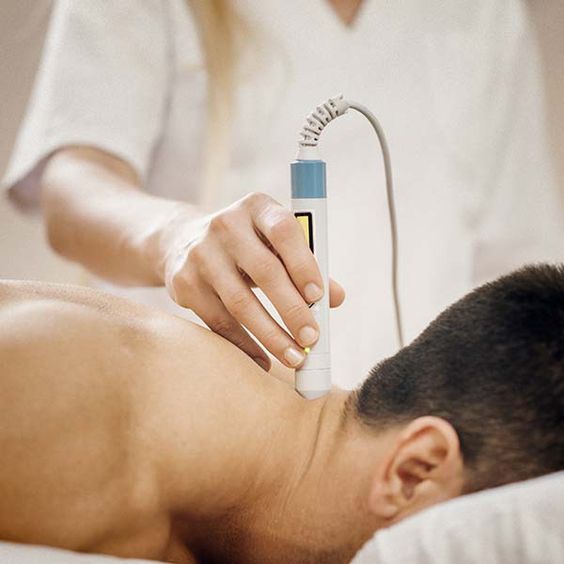
The Top 10 Safety Tips For Making Use Of Safe Laser 1800, 500
Safe Lasers are powerful therapeutic lasers of Class 4. They are not ionizing, lasers that are non-ablative. Their high output power demands that safety be taken seriously. The first thing to remember is that "do not cause harm" should be the foundational principle. It is important that patients, whether they are medical professionals or even home users with training, are aware of the risks and advantages of making use of these devices. Safety measures go beyond reading the manual. They are based on a procedure that includes pre-treatment screenings as well as correct operating procedures and strict compliance with contraindications to avoid adverse reactions and to protect both the patient and the operator. The following sections outline the most important safety precautions to ensure the safe use of Safe Laser 1800 or 500.
1. Absolute contraindications when to avoid using the product in its entirety
It is essential to be aware of the situations in which the use of laser energy is prohibited. Laser energy application to these situations can cause serious injury. Absolute contraindications to lasers are:
Active Carcinoma and Malignancies – Do not use laser energy on the suspected tumor or metastasis or known to be cancerous. The energy of light can increase cellular activity, which may encourage the growth of tumors.
The Thyroid Gland The thyroid gland is extremely metabolically active, and may be susceptible to photobiomodulation. Direct application on the thyroid cartilage in the neck is not permitted because of the risk that thyroid function may be compromised.
The Abdomen during Pregnancy. Lasers should not be used on the uterus of a pregnant woman because of the unknown possible effects.
Direct Eye Exposition It is a non-negotiable and fundamental norm.
2. Everyone present should wear eyewear with lasers
The wavelength of 810 nm is not visible to the eyes but its intensity can cause irreparable and serious retinal damage if viewed directly, or from a reflecting surface. The most important precaution is to wear certified safety glasses for lasers by the user and anyone else within the treatment area. The glasses must be evaluated specifically for the wavelength of 810 nm and the optical density (OD) that is appropriate for the capacity of the device. The use of regular safety glasses, or even sunglasses are not enough and can give the illusion of security.
3. Proceed with caution when using the following contraindications, or precautions
Some conditions need to be handled with care, and the treatment should only take place following a thorough risk-benefit analysis by a licensed healthcare professional. These include:
Photosensitivity – Patients who are taking medications that increase skin sensitivity (such as certain antibiotics, acne medication or diuretics) are at a higher chance of developing an allergic reaction.
Hemorrhage: Avoid direct use on bleeding areas or acute hematomas, as vasodilatory action could increase bleeding initially.
A fever of high intensity is a sign of a febrile disease. It is recommended to avoid any treatment.
Endocrine Glands – Unless indicated, it is best to stay clear of organs that regulate the body like thyroid glands and pineal gland.
Children and Adolescents: Avoid direct application over epiphyseal (growth) plates within bones.
4. Avoid Thermal Injury by Correctly Applying the Application Technique
The safe Laser Therapy is based on a cold laser. But, because the 1800 is so powerful, it's possible to cause mild burns by holding the device in place for too long. It is essential to follow the directions of the manufacturer as well as the physician when making use of the device. This ensures an even distribution of energy and keeps any one area from receiving harmful thermal energy.
5. Skin assessment prior to treatment and preparation
A simple but vital security measure is to examine the treatment area before application. The skin must be dry, clean, and healthy. Consult your physician prior to using the laser on tissues or skin that is damaged. Take off all reflective surfaces like jewelry, for example, off the area of treatment. Eliminate lotions and topical analgesics from the region. These can alter skin absorption.
6. Operational Security and Handling Devices
Safety is dependent on the correct use of the device. This includes:
Inspecting Devices Before Use: Prior to use check the applicator and device for signs of cracks or damage.
Secure Grip: Hold the device using the device in a secure grip, and preferably the wrist strap to ensure that it is not dropped. It could result in damage to the laser's internal components or the housing.
Place the device along with the safety glasses that come with it in the protective case, when not using them. Protect them from moisture and extreme temperatures.
7. Environmental Safety and Reflective Surfaces
Treatment environment is important. Be particularly mindful of surfaces that exhibit reflective properties, for example mirrors or fixtures made of metal. The primary laser beam could be a danger if it reflects off a surface. Place yourself and your patient to block the laser beam from reflecting off any surface, even if it is accidentally directed at the patient.
8. Biphasic and Dosage Adherence
It is crucial to stick to the dose of treatment (Joules/cm2) recommended. Dosing too much could cause tissue irritation or inflammation. The "more-is-better" idea is dangerous and ineffective when used conjunction with PBM. Follow the treatment time and protocol strictly.
9. Monitoring and documentation after treatment
Safety monitoring does not end when the device is turned off. Operators should monitor the health of patients following treatment, and inquire about any unusual sensations that might occur over the next 24 to 48 hours. Documenting treatment parameters, including any patient responses is a vital safety measure. While serious adverse effects are uncommon when the treatment is done correctly it is essential to keep track of the long-term effects.
10. User Education and Professional Supervision
Complete user education is the best way to ensure safety. That means that the healthcare professionals will receive formal training in the use of the device and PBM science. The users at home should work under the supervision and guidance by a certified health professional who has made a diagnosis with a clearly customized treatment plan. Safe Laser 1800 or Safe Laser 500 users must be aware of all safety measures before using the device. The ability to operate the Safe Laser safely is up to the user. Check out the recommended bemer készülék ára for site info including lágy lézer készülék ár, lágylézer készülék bérlés, infravörös lézer, lágylézer bérlés, safe laser kölcsönzés, lezer kezeles, lágylézer kezelés veszprém, b cure lágylézer, orvosi lézer készülékek, soft laser 500 and more.

